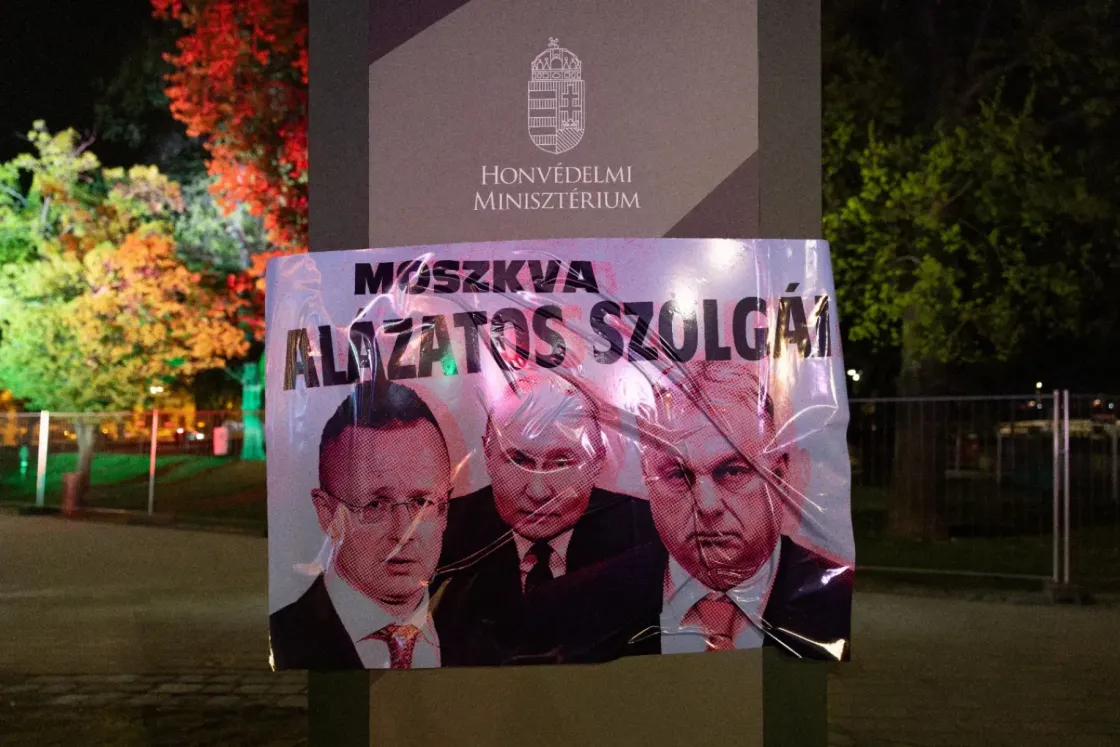


Following Viktor Orbán's election defeat last Sunday, there has been no mention in the Russian press of the Kremlin having lost a partner with whom it maintained a very special relationship. The Russian leadership immediately shifted its stance to viewing the incoming Tisza government, which Péter Magyar is set to form within weeks, as a partner suitable for pragmatic relations.
Judging by the reports in the Russian state-controlled media, the Kremlin has chosen to ignore Magyar’s statements about Vladimir Putin’s responsibility for the war against Ukraine. However, this is by no means a 180-degree turn, but rather standard Kremlin procedure when it must prepare to work with a new negotiating partner after an election.
The Russians are preparing for a pragmatic relationship
Putin did not personally react, but in his first reaction last Monday, Kremlin spokesperson Dmitry Peskov stated that “Hungary has made its decision, and we respect that decision,” and indicated, “We expect to be able to continue our extremely pragmatic relationship with the Hungarian leadership. “We have taken note of Magyar's statement about being open to dialogue. This will, of course, be beneficial for both Moscow and Budapest,” he said.
“I am pleased that the Kremlin spokesperson said what he did—that they respect the results of the Hungarian elections, and that they have heard that both I and the new government are ready for a pragmatic relationship. I can confirm this. Like many other European countries, we too have a pragmatic relationship with Russia, given that geography cannot be ignored. That is what we are striving for, since we are dependent on Russia for energy supplies, and the expansion of the Paks nuclear power plant—which, incidentally, is incredibly overpriced—is currently underway. “I can say that we will review every contract; if necessary, we will renegotiate them; if necessary, we will terminate them; and if need be, we will improve the financial terms,” Magyar said at last Monday’s international press conference.
“If Vladimir Putin calls me, I will answer the phone. I don’t think that will happen, and I won’t call him myself, but if we were to speak, I would tell him the same thing: that after four years, it’s time to stop the killing and end this war, which even from their point of view makes no sense whatsoever, he said. “It would probably be a brief phone call, and I don’t think he would end the war based on my advice. I very much hope that, regardless of this, he will be forced to bring this war to an end within a very short time.”
“In politics, it’s one thing when you haven’t yet taken the country’s helm and can make statements. Once you’re in that seat, you have to – so to speak – take a more pragmatic approach. And that’s what we’re counting on,” TASZSZ quoted Peskov as saying. Then on Tuesday, he said: “For now, we have been pleased to note that, to our knowledge, [Magyar] is willing to engage in pragmatic dialogue. In this case, there is mutual willingness on our part, and we will proceed based on the specific steps taken by the new Hungarian government.”
The end of a beautiful friendship?
It appears that the gestures the Kremlin previously made toward Orbán—which could be interpreted as friendly in the world of diplomacy—will not carry much significance. Additionally, Russia expert András Rácz noted in Telex’s election-day coverage that “We know of at least three Russian government-affiliated bodies that are interfering in the Hungarian elections.”
Moreover, in early March, Putin said he remains committed to supplying natural gas to Hungary and Slovakia—a commitment to which he is bound by a valid contract—provided that these countries “adhere to the policies currently in place.” Although this appeared to be a warning to Hungarian voters, the Orbán government—which has been particularly sensitive to statements affecting its sovereignty—did not raise any objections to this attempt at influencing the election.
It was also a decidedly friendly gesture toward Orbán when, in April 2022, the Kremlin congratulated Fidesz on its two-thirds victory. Such congratulations would normally be standard procedure in diplomatic protocol in a world not plagued by war, but at that time, Russia's war against Ukraine had already been underway for two months. To be sure, Hungary was not yet on the list—which had been in existence since 2021 and expanded after the start of Russia’s war against Ukraine—which contained countries the Kremlin deemed as “unfriendly to Russia.”
It was only in March 2023, following the vote on EU sanctions, that Hungary was added to the list, but along with Slovakia, it was exempted from the sanctions that Russia imposed against all EU and NATO members as a countermeasure. Hungary is also not included—along with Slovakia, the only other NATO and EU member—on the list of countries, which, according to the Russian leadership, pursue policies “contrary to the country’s traditions, religious, and moral values of their country.
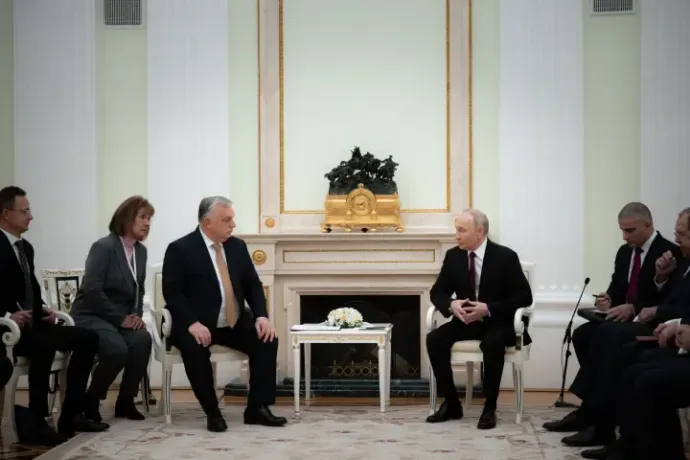
The term “friendship” can, of course, be misleading, given that during Orbán's government, it actually referred to the development of a relationship that culminated in the attacks of Russian hackers who easily infiltrated the Hungarian foreign ministry’s servers, as well as in Péter Szijjártó’s telephone conversations with Russian Foreign Minister Sergey Lavrov and Orbán’s calls with Putin.
These showed that the Orbán government had assumed a position of complete subordination to the Kremlin.
Phone conversations disclosed on investigative websites revealed that the Hungarian foreign minister had discussed the contents of EU meetings with Lavrov and, in response to a vague request from his Russian counterpart, immediately offered to provide a requested EU document. It is unclear what kind of document this was, but this was nonetheless an unusual act of giving Szijártó the runaround; if this was a public document, the matter is serious in itself, but if it was a classified document, the implications are even more grave. Hungary has succeeded in removing several Russian individuals from EU sanctions lists, including, through Lavrov’s intervention, the sister of oligarch Alisher Usmanov, who was thus able to manage the finances of her billionaire Kremlin-aligned brother in Europe without hindrance. And Orbán, during a phone call with Putin, simply likened Hungary to a little mouse lending a helping hand to the great Russian lion.
Whether Hungary benefited from the informal relationship emerging from these embarrassing conversations—a relationship which apparently extended beyond regulated diplomatic channels and which further isolated Hungary within the EU—is another matter. The Orbán government has stressed the benefit of the continued possibility of importing cheap Russian energy, but it certainly does not appear that the Russian side necessarily required a policy that led many in the EU to view the previous Hungarian government as Russia’s Trojan horse.
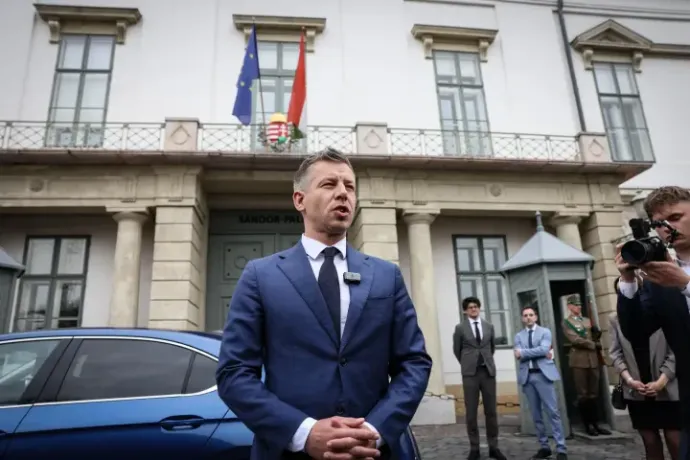
The Kremlin ignored the critical remarks
Although the Kremlin did not congratulate Magyar, the Russian president’s spokesperson justified this by citing the aforementioned list of countries—essentially indicating that “it’s nothing personal” and that the lack of congratulations was not specifically a sign of rejection.
In fact, it is striking how blind the Russian press—which is tightly controlled by the Putin regime—has been to Péter Magyar’s statements, which unequivocally condemned the Kremlin for its war against Ukraine. Since last Sunday, the Russian side has been talking about the potential for pragmatic relations, provided the new Hungarian government is willing to pursue them. Rosatom's CEO spoke in the same vein about the Paks expansion: According to Alexey Likhachev, there is every chance of continuing the project—even though construction itself is years behind schedule, with work on the first concrete foundation having only begun in February. He partly justified his optimism by saying that Magyar had "worked in the Orbán government"—which, incidentally, is not true.
“This is Putin’s usual attitude toward every election. This conveys the image that he is the wise politician who condescendingly understands that Europeans have this fuss called democracy, where politicians say all sorts of things publicly during elections. But the bottom line is decided behind closed doors, during substantive dialogue with the partner who has been put in a position to make decisions,”
— Maxim Samorukov described the situation to Telex. According to the research fellow at the Carnegie Russia and Eurasia Center—which was forced to relocate from Russia and now operates in Berlin—there is therefore nothing unexpected about the Kremlin not clinging to Orbán. “The Kremlin always bases its relationships on private, personal interactions, and does not attach much significance to public statements or messages heard in European election campaigns, which are viewed with disdain anyway.”
It’s pragmatism, not friendship
This is why it came as no surprise when Peskov spoke of the possibility of a relationship with the incoming prime minister. The Kremlin has indeed never spoken of friendship in relation to Orbán, but rather of pragmatism—though there is no doubt that, in the context of Russian aggression against Ukraine, given the stance of European countries condemning the Kremlin and supporting Ukraine’s defense, the actions of the Orbán government—which ran counter to that stance—made this cooperation seem far more than just a matter of practical considerations. It was certainly advantageous for Russia that it was able to maintain this close relationship with a country whose head of government proudly declared that, when it came to the EU, Hungary was a "stick in the spokes" and a "thorn in the side," that is, capable of obstructing the EU’s unified action.
However, Moscow did not need to call this friendship or treat it as such. “This was never about friendship. Moscow has always said that it is not satisfied with EU sanctions, but despite this, there may be specific issues where cooperation is possible in the interest of common goals,” said Samorukov. In his view, Russia essentially held up Russian-Hungarian relations as a model for other EU member states.
“The Kremlin’s message was that you can have objections, you may even voice them publicly, but that doesn’t necessarily mean you have to sever all ties, even if the other party is a member of NATO that supports sanctions.” Hungary’s benefit lay precisely in the fact that, based on the model of their relationship with Hungary
Putin likely hoped that they would be able to undermine the unity of the EU and NATO on a broader scale, which he could have then used to reduce Western support for Ukraine.
However, this has not materialised, and with the departure of the Hungarian government—which had previously been vocal in its opposition to providing further financial aid to Ukraine—this scenario now seems even less likely.
At the same time, the Kremlin has, for the time being, remained cautious in its statements on this matter. When asked how relations between the Russian and Hungarian governments would develop now that the new Hungarian government will not block the release of the €90 billion loan to be provided by the EU to Ukraine, Peskov responded only in general terms and did not address Hungary specifically. He reiterated the Kremlin’s well-known position that the EU is supporting pro-war efforts, while Russia is seeking to achieve its goals in Ukraine through military force.
Although widely reported, Peskov did not discuss whether there was a friendship with Orbán
The Kremlin spoke of the past in a similar vein, emphasizing the pragmatic nature of the relationship. Although it was reported in the press via The Guardian that Peskov allegedly said, “We were never friends with Orbán,” the spokesperson did not actually make any such statement; this appeared in analyses and interpretations of his words, some of which even included it in their headlines. “There was no friendship with Orbán; the dialogue with Budapest continues,”political scientist Alexander Bovt wrote in his commentary summarizing Peskov’s briefing.
The other source was a post by journalist Alexander Yunashev, in which he quoted Peskov as saying: “We do not send congratulations to countries that are not friendly. And Hungary is not a friendly country, since it supports the sanctions currently in place against us.” Hungary was added to this list—which has been in existence since 2021 and has been continuously expanding since the start of the war launched by Russia against Ukraine—in March 2023. The first two countries on the list were the United States and the Czech Republic; however, in the case of Donald Trump, the Kremlin made an exception, congratulating the Republican president on his return to office in November 2024.
Yunashev then wrote: “In response to my follow-up question as to whether this meant that Moscow had become friends only with Orbán, Peskov replied: ‘We have been engaged in a dialogue with him.’”
In some articles, this became a specific quote attributed to Peskov and was further circulated in the press with the interpretation that the Kremlin had discarded Orbán as a friend. This interpretation may be appropriate in an opinion piece, since his words do indeed imply that the Kremlin clearly does not insist on maintaining ties with someone once they have gone into opposition, given that substantive decisions are made by those in power. However, the spokesperson did not speak specifically about friendship or the lack thereof in Orbán’s case. He merely stated on several occasions that they hope the previous pragmatic relationship will continue.
It is true, however, that Putin’s aforementioned pre-election statement about energy exports somewhat contradicted the intention of a pragmatic relationship, as he tied that intention to the preservation of the government’s political direction.
With Iran, Trump put Putin in a strong position
“This actually simply reflected the confidence stemming from the new circumstances, namely that the price of crude oil had jumped from sixty to over a hundred dollars,” said Samorukov, referring to the consequences of the US intervention against Iran. Putin felt that the moment was now right to take the initiative from the EU, which, based on the existing sanctions, would completely phase out imports of Russian fossil fuels by 2027, and instead, be the one to move the deadline forward.
Moscow can speak of a willingness to pursue pragmatic relations precisely because Hungary has also shown itself ready for this. At the international press conference, Magyar also indicated that they would like to diversify the country's energy imports, but the geographical situation remains unchanged: Hungary depends on Russia for energy sources. This was the point the Russian press highlighted most, while ignoring the second part of the statement, in which Magyar spoke very strongly about Putin's responsibility in the war.
With the Druzhba oil pipeline out of commission, there is currently no Russian crude oil coming to Hungary, but according to Ukrainian assurances, this will once again be possible starting in late April at the latest via the damaged pipeline—which the Orbán government claims is actually operational but has been blocked for political reasons. In this situation, in the absence of a fully viable alternative, giving up Russian supplies would not be justified, especially since this does not even violate EU sanctions, since Hungary, Slovakia, and the Czech Republic have all been granted exemptions for imports via this pipeline for the time being.
Furthermore, it is impossible to predict what the situation will be in two months' time due to the situation in Iran, the Carnegie analyst noted, explaining why it would be premature for Magyar to commit to a significant reduction of Russian imports. This is why he said at his international press conference—somewhat exaggerating—that there are other European countries which also maintain pragmatic relations with Russia. There is no way to predict how the shortage of crude oil and, to some extent, natural gas caused by the Iran war which led to the closure of the Strait of Hormuz will develop over the next two months. According to Samorukov, it cannot be ruled out that if the situation remains unresolved, the Germans and Italians will also start looking at Russian crude oil and natural gas as an option.
Thus, it may indeed be in the interest of both sides to discuss the possibility of pragmatic relations, without mentioning the concept of “friendship”—a term used in diplomatic discourse but which is, in reality, difficult to interpret. True, this could undoubtedly come into conflict with the intention of preventing Russia—which is financing its war against Ukraine—from gaining revenue. However, a situation could arise with Iran where several EU member states could face this dilemma.
Back in mid-March, following the spike in oil prices, the United States announced that Russian oil stranded at sea would be exempt from sanctions for roughly a month and that its purchase would be permitted. Trump’s decision was strongly criticised by European leaders, as was the move several days later to extend the exemption from sanctions to the 140 million barrels of Iranian oil currently at sea. This exemption expired on Sunday, April 19, and U.S. Treasury Secretary Scott Bessent indicated the week before that they do not plan to extend it.
For more quick, accurate and impartial news from and about Hungary, subscribe to the Telex English newsletter!