Anita Orbán: A country cannot be sovereign without a sovereign foreign policy
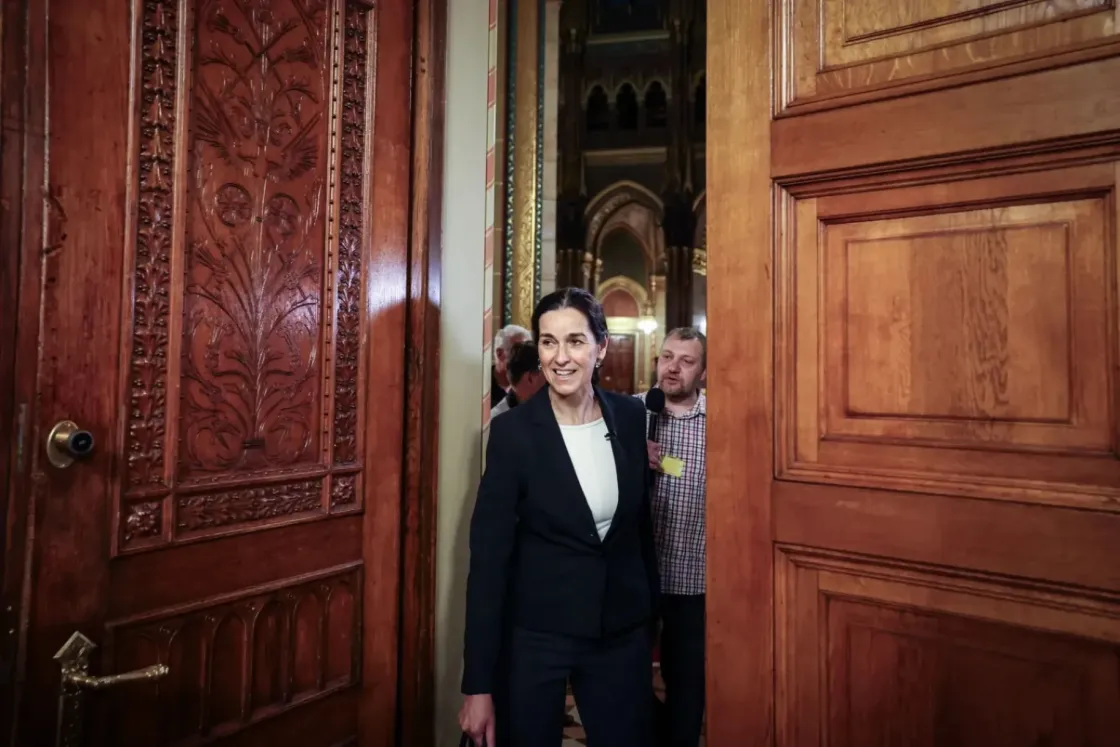



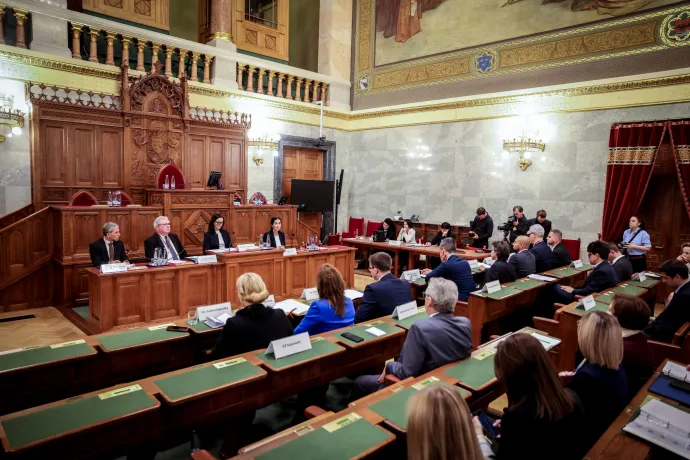
“We’ve been the stick in the spokes far too often, and the spokes in the wheel too rarely,” said Anita Orbán, the nominee for the position of Minister of Foreign Affairs, during her confirmation hearing before the Hungarian parliament's Committee on European Affairs. In her view, this resulted in Hungary losing international influence as well as losing the trust of others. Going forward, Hungary will not remain silent, but will return to being a reliable negotiating partner.
Veto is a legitimate tool, and if necessary, the new government will use it when Hungarian interests are truly at stake, but it has been used too often as a form of “political theater.” In the future, it will not be a self-serving tool, a tool for blackmail, nor a tool for domestic political campaigns.
This is where she sees the difference between isolation and asserting Hungary’s interests.
The parliamentary confirmation hearings for ministerial nominees in the new Hungarian administration began on Monday morning with Anita Orbán. She first presented her plans to the Committee of European Affairs, where members of parliament serving on the committee were also able to ask questions. Before the session began, she went over to speak privately with the Fidesz and KDNP representatives, including outgoing EU Affairs Minister János Bóka.
The first topic she addressed in her presentation was that of bringing home the blocked EU funds. She stated that it is not a bureaucratic or party-political issue, but one that has an impact on local governments and families. We have paid a heavy price because the Orbán government failed to meet the necessary conditions, but nothing the EU expects is detrimental to Hungarians—it does not expect blind nodding or the surrender of our interests.
An independent judiciary, and the use of EU funds in a transparent rather than corrupt manner—these are all in the interest of Hungarians, and this is what Hungarians voted for on April 12. Anyone who claims otherwise is misleading the country, but we cannot achieve this through political statements alone; specific steps need to be taken. We must strengthen the justice system, take action against corruption, and make the distribution of EU funds more transparent. “There's a major legislative process ahead of us,” she noted, indicating that the Parliament has a lot of work coming up.
Hungarian foreign policy and European policy will focus on three things: “security, integrity, and influence.” Hungarian interests can only truly be advanced in alliances, not through combative isolationism.
Hungary wants peace and stands for peace; it will not be dragged into the war in Ukraine, nor will it send weapons or troops. Ukraine’s “European integration must be a strictly merit-based process” with conditions and guarantees, and “from the very beginning, the rights of the Hungarian community in Transcarpathia must be fully respected,”
but this “cannot be a political charade", she said.
Hungary will continue to protect its external borders, which is our duty; but this and EU law are not mutually exclusive, she stated on the subject of migration. It is in Hungary’s interest to ensure that its borders continue to be protected using ‘"egitimate procedures" in cooperation with its European partners.
Hungary must actively participate in European debates on competitiveness. The seven-year budget starting in 2028, the policy of convergence, and agricultural and defense subsidies are all areas that will determine Hungary’s future; and there is no room for isolation, delays, or a lack of credibility.
“Hungary fighting its own allies while losing influence, money, and its future must be brought to an end.”
The Orbán government’s EU Affairs Minister, János Bóka, whose portfolio will be dissolved due to a law passed on Saturday, was also allowed to participate in the deliberations. He regretted that the committee was unable to hear from the Prime Minister’s Office, which will take over responsibility for the area. Among other things, he asked Anita Orbán whether she would be in favour of applying the so-called 'passerelle clause' which would allow a switch from unanimity to a qualified majority, thus enabling a faster amendment of the EU Treaty. He was also curious about the incoming government’s position on the EU's next seven-year budget. He believes that the suspensions were primarily politically motivated, and since those obstacles have been removed, he supports any necessary decisions. He called for the continuation of proceedings against the “discriminatory” decision excluding “Hungarian students” (in reality, the exclusion applies to 21 Hungarian universities which had undergone a model change) from Erasmus student exchanges.
Anita Orbán confirmed that the process of securing EU funds will come under the direct supervision of the Prime Minister’s Office. She also said that unanimous decision-making is an important tool which ensures that we always have a say in the matter. In response to Bóka's question, she said that the Hungarian government will not join the €90 billion loan for Ukraine, but did not rule out joint borrowing for other purposes. Convergence and agricultural policy are of paramount importance, but they have only just joined the negotiations on the budget due to start in 2028. They intend to resolve the issue of public asset management foundations through an ambitious timeline and legislation.
She also said that they will review the plan submitted for the 16.2 billion euro defense loan, SAFE, but added that they have not yet seen it, however, incoming Defense Minister Romulusz Ruszin-Szendi will be the primary reviewer of it.
The Ministry of Foreign Affairs is going to use diplomatic means to help secure the cheapest possible energy and ensure that we are not at the mercy of any single country. With regard to crude oil, they are going to “review” the Croatian alternative to the Druzhba pipeline, which transports oil from Russian sources through Ukraine; they also want predictable, stable, and cheap energy for Hungary— she said in response to Fidesz representatives questioning her about the Tisza government's approach to the EU's unanimous decision from 2022, also supported by Viktor Orbán, on phasing out Russian energy.
She promised to take action against all forms of illegal migration. She noted that the previous Hungarian government had decided against taking additional steps towards securing the border beyond the physical construction of the fence, and was virtually the only member state not to have taken action regarding the asylum package. In implementing the package, the incoming government would opt for providing technical assistance rather than accepting asylum seekers or making financial payments.
In response to a question from a Tisza-delegated member of the committee, she called Slovakia’s actions relating to the Beneš Decrees unacceptable and said that Prime Minister Péter Magyar plans to discuss this with Slovak Prime Minister Robert Fico on the sidelines of his first EU summit in June.
The committee voted in favour of the appointment of Anita Orbán with six votes in favor and two abstentions.
“The minister’s work should be judged based on their work, which is why we abstained,” Bóka told Telex after the vote, explaining why they abstained. He said they felt ambivalent about the hearing and noted that as far as the EU funds go, an agreement “has always been within reach,” and this remains the case; in his view, it was political obstacles that had been in the way, and these have now been removed. They will be partners in making the necessary decisions, “provided the same serve Hungary’s interests,” he promised.
All ministerial nominees of the Tisza government are being heard by the relevant committees on Monday. Some candidates only have to appear before one committee, while others have to appear before two or three. Anita Orbán leads the list, as other than the Committee on European Affairs, she also had to appear before the Foreign Affairs Committee, and will be heard before the Committee on National Security later in the day.
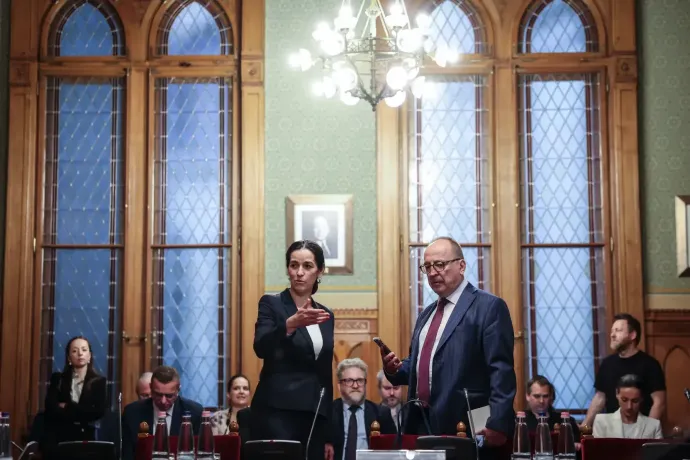
At her hearing before the Foreign Affairs Committee, Anita Orbán stated: “In keeping with the legacy of St. Stephen’s founding of the state, Hungary’s place is in the European Union and NATO.” In her presentation, she also stressed that
"a country cannot be sovereign without a sovereign foreign policy".
She emphasized the importance of reaffirming the Hungarian-Polish friendship, which she sees as a key element of the effective functioning of the V4, along with "placing Hungary's cooperation with the Czech Republic and Slovakia on a new footing". She had previously revealed in an interview with RTL that her first trip abroad after assuming office would be to Warsaw in the company of Prime Minister Péter Magyar, followed by a joint visit to Vienna. After that, she will attend the NATO summit.
Anita Orbán said that she considers Russia’s current foreign policy a risk factor. Hungary will “seek to establish a transparent relationship based on mutual interests” with Russia, she said. Acknowledging Ukraine’s territorial integrity and sovereignty is a self-evident fundamental principle, while restoring the rights of the “ethnic Hungarian community in Trsanscarpathia” remains a task for the incoming admnistration.
With regard to the Hungarian minorities living in neighbouring countries in general, she repeatedly emphasized the importance of protecting their rights, with the key to this being the normalization of bilateral relations. She said that this also applies to Slovakia; back in January, Péter Magyar had addressed Slovak Prime Minister Robert Fico in an open letter regarding the subject of the Beneš Decrees.
“We are unable to deepen our relations with a country that bases its judgment of a minority on the principle of collective guilt,” Anita Orbán said.
Keeping such laws in force is “completely contrary to EU law, EU values, and fundamental universal human rights.” Although she did not specifically mention the Beneš Decrees in her remarks, it was clear that this was what she was referring to. She only mentioned Slovakia by name when she emphasized the importance of normalizing relations for the effective functioning of areas relating to energy security and cross-border cooperation.
She argued that diversification of energy sources is necessary. She has long been a strong advocate for ending Hungary's dependence on Russian gas—which is in line with Fidesz’s early policies. In fact, in the early stage of her career, between 2010 and 2015, the prospective foreign minister served as ambasssador-at-large responsible for energy security. With time, however, it became increasingly clear that Viktor Orbán’s government would rely more and more on Russian energy sources rather than pursuing diversification, which is why Anita Orbán ended up stepping down from her position in 2015.
Today, with the abstention of the three Fidesz-delegated members and six voting in favor, the Foreign Affairs Committee approved her appointment as foreign minister.
“We will anchor ourselves in the Western alliance system,” Anita Orbán said in her first interview, which she gave on Péter Magyar’s YouTube channel after becoming the Tisza Party’s head of foreign affairs, signaling her clear Western, Atlanticist commitment. Hungary’s future foreign minister joined the Tisza Party on January 24, and Péter Magyar immediately introduced her as the party’s foreign affairs expert and the new face of Hungarian diplomacy. Born in 1974, Anita Orbán worked as an economist in Hungary's business sector; in the 2000s, she covered public life and politics as a columnist for Heti Válasz, and remained a regular contributor to the weekly for many years thereafter. Within Fidesz, she was associated with the circle of János Martonyi, who served as foreign minister during the first and second Orbán governments (between 1998–2002 and 2010–2014). Our portrait of her can be read here.
Following the confirmation hearings, parliament will reconvene for a plenary session on Tuesday at 4:00 p.m., during which, according to the House Committee’s proposed agenda, the President’s letter announcing the appointment of the new ministers will be read out, Prime Minister Péter Magyar will introduce his cabinet, and the ministers will then take their oaths of office.
For more quick, accurate and impartial news from and about Hungary, subscribe to the Telex English newsletter!